SupplyCheck
is a conceptual B2B2C SaaS platform designed to restore consumer confidence in the authenticity of goods—particularly high-value products like luxury items—by verifying supply chain documentation.

The Problem
A trusted business faced reputational ruin after being accused of selling counterfeit items—despite winning the legal battle. In the court of public opinion, the damage was already done.
For Consumers
No easy way to verify if a product (e.g. luxury bags) was sourced from a genuine distributor.
Low trust in retailers claiming authenticity.
For Distributors & Retailers
No straightforward method to prove they source from legitimate manufacturers.
Sales and brand trust suffer from even one claim of counterfeit products.
The Solution
SupplyCheck is a two-sided platform with a consumer search engine and a distributor document upload system:
For Consumers
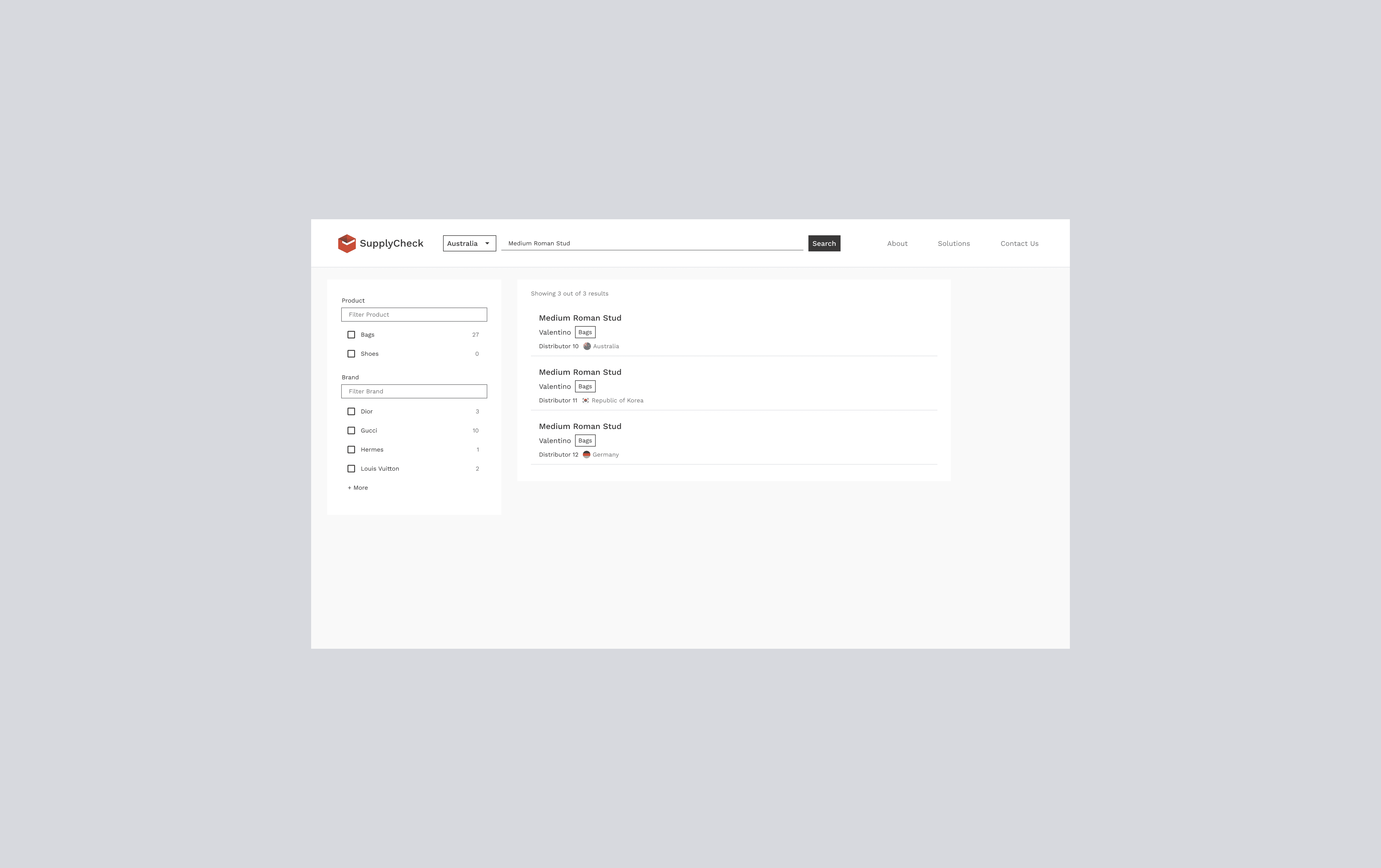
A simple search engine lets buyers input their product details and purchase location. If the distributor of that item has submitted legitimate proof, a certificate appears verifying its authenticity.
For Distributors
An upload portal where sellers can provide documents like:
Bills of lading
Certificates of origin
Purchase receipts
These are reviewed by an internal admin team. Once verified, SupplyCheck issues a digital certificate tied to the product or batch.

Win - Win
This creates a win-win scenario for both consumers and businesses. Consumers can shop with greater confidence, knowing there's a reliable way to verify whether a product was sourced from an authorized distributor. At the same time, sellers and distributors benefit from being able to transparently prove the authenticity of their goods, helping them build trust with their audience and ultimately drive more sales.
Design Approach
Given the fast-paced nature of this project and the limited resources available, I adopted a lean design thinking approach to ensure focus and impact. The first step was to clearly define the problem space by interviewing a business owner whose company was nearly destroyed due to counterfeit accusations. This provided valuable firsthand insight into the real-world implications of lost consumer trust and lack of verification systems.
With a deep understanding of the pain points, I moved quickly into ideation. I deliberately eliminated features that were “nice-to-haves” and honed in on what was absolutely essential: a seamless search experience for consumers, and a straightforward upload and verification flow for distributors. My goal was to create a minimal, intuitive product that could stand up to scrutiny and demonstrate immediate value during the pitch.
From sketching to prototyping, I prioritized clarity, trust, and transparency in every interface. Every button label, empty state, and interaction was designed to feel straightforward and credible—attributes critical in a system built around authenticity. Despite the time constraints, I was able to design two polished flows that clearly demonstrated the platform’s value from both a consumer and a business perspective.

Challenges & Constraints
TIme
No easy way to verify if a product (e.g. luxury bags) was sourced from a genuine distributor.
Low trust in retailers claiming authenticity.
Team
No straightforward method to prove they source from legitimate manufacturers.
Sales and brand trust suffer from even one claim of counterfeit products.
Focus
No straightforward method to prove they source from legitimate manufacturers.
Sales and brand trust suffer from even one claim of counterfeit products.
Reflection: What I have learned
This project reinforced for me that trust is one of the most critical elements in user experience—especially when dealing with products tied to identity, reputation, and financial value. The core insight driving SupplyCheck was that even when legal proof exists, public perception can devastate a business. As a designer, it’s not just about making things look good or function well; it's about building systems that instill confidence and credibility from the very first interaction.
Working under tight time constraints also reminded me of the value of lean design thinking. By focusing only on what truly mattered, I was able to deliver a clear, meaningful solution without getting lost in features that wouldn’t serve the core user needs. Constraints became a creative advantage, helping sharpen the vision and streamline execution.
Finally, designing for a two-sided platform challenged me to think deeply about both ends of the user journey. Consumers needed simplicity and clarity, while distributors required robust, trustworthy tools. Striking a balance between these needs—while keeping the product intuitive—was a powerful exercise in empathy and prioritization.
The Final Form




2025 | Jerry's Playground